Whitepaper - RED3 & ERE's

Route-oriented approach for battery-electric boating (subsidy support)

On November 17, 2026, the Ministry of Energy and Industry will open the Temporary Subsidies Scheme for the Early Scale-up of the Energy Transition for Ships 2026–2029 (TSVOEB). The first round runs until March 16, 2027. The scheme provides, under certain conditions, support for both ships and charging infrastructure. This will be used to further accelerate the transition to emission-free navigation.

Now is the time: Condor ZE is helping inland navigation move towards battery-powered electric sailing

On November 17, 2026, the Ministry of Energy and Industry will open the Temporary Subsidies Scheme for the Early Scale-up of the Energy Transition for Ships 2026–2029 (TSVOEB). The first round runs until March 16, 2027. The scheme provides, under certain conditions, support for both ships and charging infrastructure. This will be used to further accelerate the transition to emission-free navigation.

The route-oriented approach

To determine the extent to which the transition is already feasible, Condor ZE is starting with a route-oriented approach. Together with the relevant parties, we are looking at three questions per sailing route:

  • To what extent is the transition technically possible?
  • To what extent is the charging infrastructure available?
  • To what extent is the transition economically feasible?

First routes

We are starting with container shipping on the Amsterdam–Rotterdam and Rotterdam–Nijmegen (via Tiel) routes. These are routes with a short, fixed sailing profile and a lot of container shipping. That makes them a logical starting point to investigate the feasibility of electric shipping. With the insights from these routes, we want to make the transition to electric shipping easier for the entire inland shipping sector.

Route approach and subsidy

The route approach is aligned with the subsidy scheme and aims to encourage more applications for subsidies, so that more ships will sail emission-free. The parties involved must submit their own application for subsidies; Condor ZE supports this. Please note: it does not offer any priority or guarantee of obtaining this subsidy.

Join in or come up with your own idea

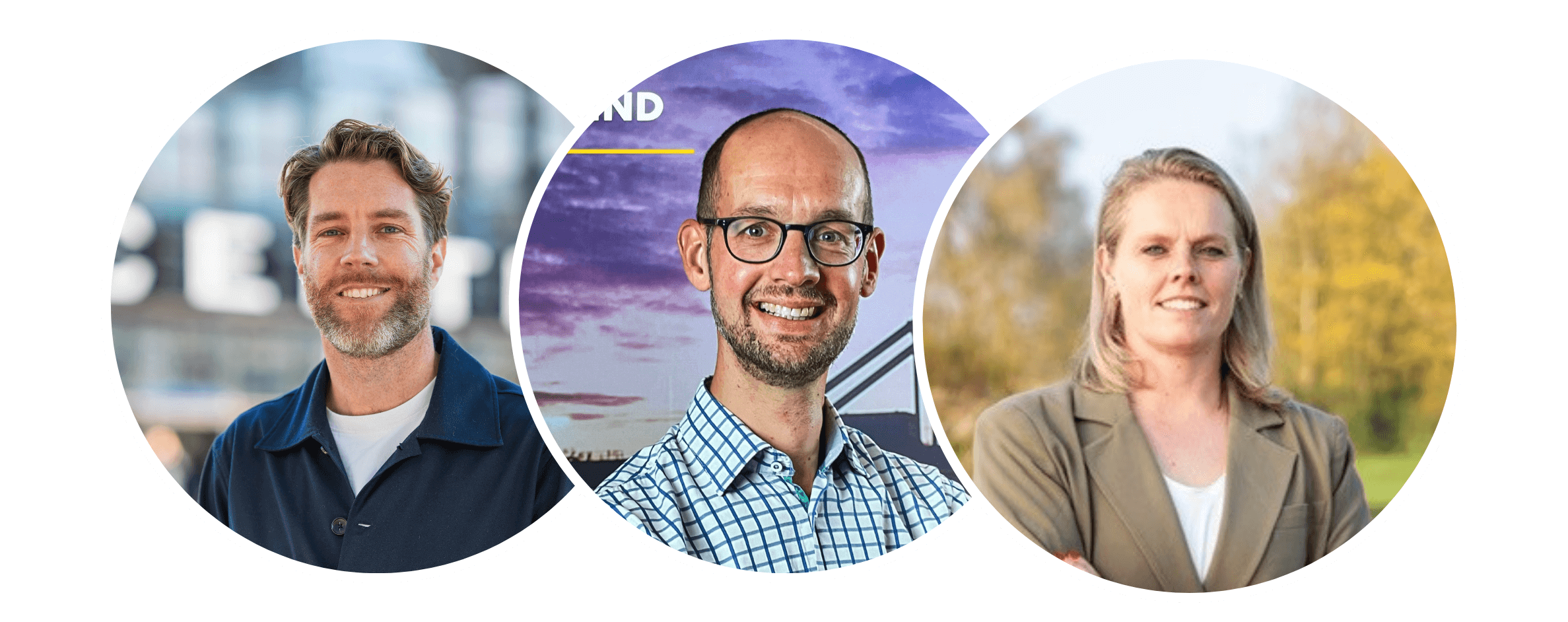
Are you active on one of these routes, or do you have your own plan for electric boating or charging infrastructure? Would you like to discuss your plan and the possibilities for joining? Please contact Eric Warners or Rianne de Vries from Condor ZE: 

Want to know more? Come on December 2nd to the Condor ZE partner meeting or read it Whitepaper on financing.
More information?

About Rianne de Vries

With in-depth knowledge of sustainable propulsion technologies, alternative fuels and infrastructure solutions for the inland navigation and maritime sector, I actively contribute in various ways to accelerating the transition to zero-emission transport. I use my experience in ports, maritime sector combined with a pramatic approach to create system conditions for large-scale sustainability of inland navigation.

About Renze Boersema

In this project, I focus on developing and validating the financial and strategic rationale for zero-emission boating. Specifically, I visualise the business case for both hydrogen and battery-electric solutions, with an eye for operational and economic feasibility. I also conduct discussions with banks to formulate clear financing requirements that match the specific characteristics of sustainable inland vessels. Finally, I provide an overview of available subsidy schemes and support options, so that the sector can make optimal use of incentives for sustainability.

About Johan Gille

From the Port of Rotterdam Authority, Johan focuses on a reliable, future-proof and sustainable waterway network. After all, inland shipping is the lifeline for the port. He has a broad network in government, provinces and inland ports and promotes the development and standardised deployment of instruments that governments can use to support the move to zero emission inland shipping.

About Irma Belgraver

Irma focuses on developing financing arrangements to support zero-emission shipping. From a strong network within the inland navigation sector, government organisations, industry associations and knowledge institutes, she initiates collaborations to strengthen the economic feasibility of sustainability. In the coming period, strategic options will be explored to optimise the business case.

About Eric Warners

Eric Warners worked in the port of Amsterdam for more than seven years on initiatives to make shipping and industry more sustainable. He has been involved with Condor since October 2024. Eric has always gericht on complex issues that can only be solved through (public-private) cooperation. For the past decade, his focus has been entirely on the maritime and industrial sectors.

About Wouter Vuijk

Within the Port of Rotterdam Authority, Wouter works on making inland navigation more sustainable, with a specific focus on the transition to emission-free sailing. At Condor, he supervises the process in which, in cooperation with the sector, technical standards are being developed. This removes an important threshold for this transition.
